
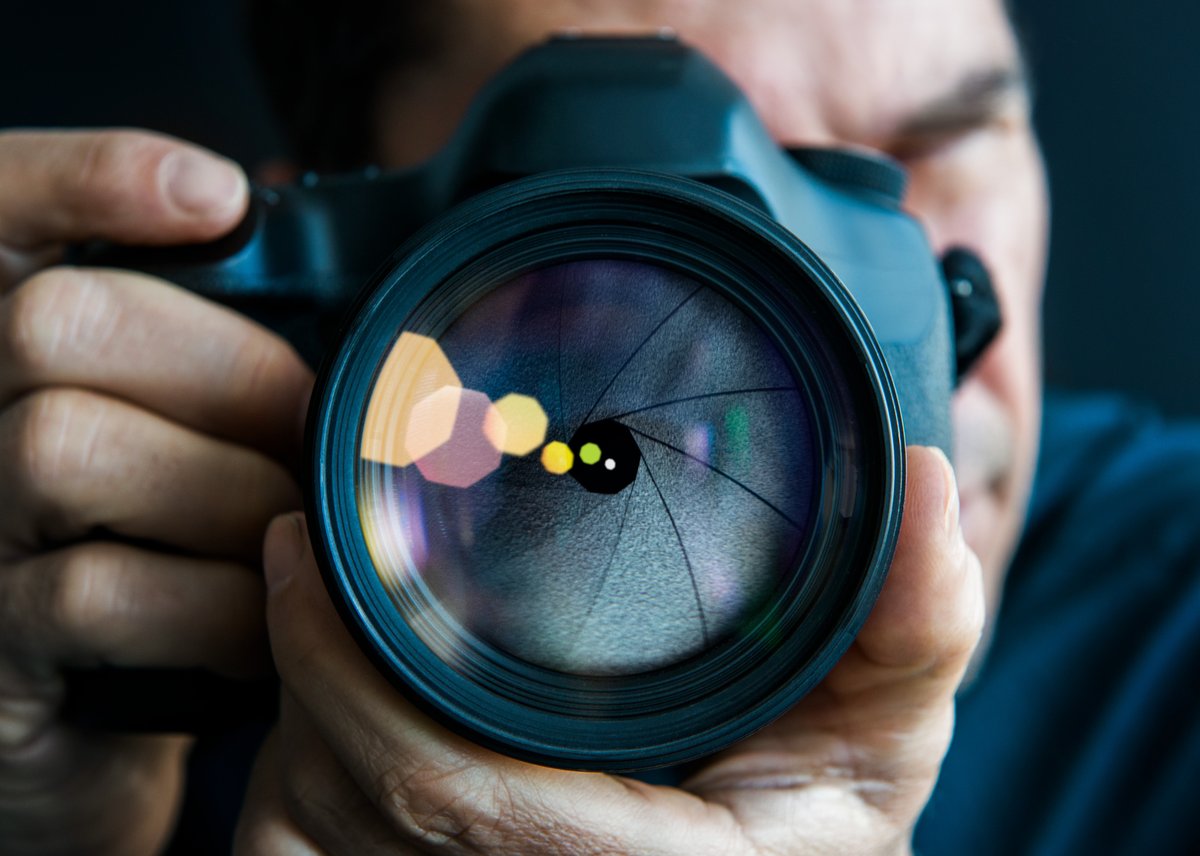
Taking photos using a camera need not only be a matter of pushing buttons, as photography is an art form and as such must employ a form of both technical and artistic knowledge. Joining the world of cameras, you get hit with a lot of new terms to learn, and they sound weird in the ears: ISO, aperture, shutter speed, and white balance. This ought to come easily to a good photographer. To the novice, they may seem like a new language.
The best way to begin taking control of your camera and your photographs is by learning these basic photography terms. After familiarizing yourself with the operation of these cameras, you will be able to use any form of lighting to take pictures and get the desired effect; besides, you will cease to use auto mode.
Counting yourself among all photography hobbyists, vloggers, or YouTubers, first-time camera buyers, or content creators of all walks of life, this guide will tell you the basic photography terminology that a beginner must familiarize him or herself with. We will simplify the ideas and offer some real-life examples and the recommendations of the best beginner camera to help you apply this knowledge to action.
1. ISO Your camera sensitivity to light
Definition: ISO determines how sensitive your camera sensor is. It is symbolized by such numbers as ISO 100, 400, 800, 1600, and so on.
How It Works:
- Low ISO (100-200)—an excellent choice in the case of sunny outdoor photography. Images are sharp and noise-free.
- Medium ISO (400-800)—Indoor shooting without a flash.
- High ISO (1600-6400+)—can be useful to get shots where there is low light, but can cause grain (digital noise).
Example: Shooting at the beach in the sun? ISO 100 will serve you with sharp pictures. Night photographing of a concert? At low light, you might even require a high ISO like ISO 3200 or more to capture a bright shot.
Typical Beginner Mistakes: Keeping the ISO up. This entails excessive noise when the conditions are bright.
Pro Tip: ISO should always be set down as far as possible depending on your lighting situation and only be elevated when you require additional light.
Recommended Gear: For beginning photography, the camera recommended are the Canon EOS R50, or Nikon Z50; you get decent performance under high ISO, and can even get experimental with your photography.
2. Shutter Speed—controls motion in your photos.
Definition: Shutter speed is a parameter referring to the time for which the shutter of a camera is left open, allowing this light to access the camera and then reach the sensor. It is represented as a unit of fractions of seconds (e.g., in 1/1000s, 1/60s) or seconds in the instances of prolonged exposures.
This is how it works:
- Fast Shutter (1/500s, 1/2000s) Frozen, motionless moving subjects—sports or animals.
- Moderate Shutter (1/60s – 1/250s) Can be used every day and in portraits.
- Slow Shutter (1/30s or slower) Movement blur on the images is deliberately created aesthetically (e.g., light streaks, silky waterfalls).
Example: A race shooting his bike? Make the movement stationary with 1/1000s. Need smooth water in a dreamy landscape shot? Tripod 1/4s.
Typical Beginner Mistakes: Having the shutter speed set too slow so that shots are blurred as the camera is being used handheld.
Pro Tip: As a general guideline, anything over your lens’s focal length in shutter speed will get a decent sharp handheld shot (e.g., 1/50s on a 50mm lens).
Recommended Gear: The Sony a6400 is ideal first-time marijuana leaf gear that needs quick and responsive shutter performance.
3. Aperture—The Depth of Field Key
Definition: Aperture is the opening size of the lens (in f-stops, e.g., f/1.8, f/4, f/16).
How it Works:
- Wide Aperture (f/1.4 – f/2.8) – Admission Increase, shallow depth of field (background blurs).
- Medium Aperture (f/4 to f/8)—Ideal setting to balance light and depth in focus to do general shooting.
- Small Aperture (f/11 – f/22) allows less light to pass and much of the scene to appear sharp.
Example: Would you like a portrait with a gentle, out-of-focus background? Set the f/1.8. Firing at a mountain scene in which everything is hard? Use f/16.
Typical Beginner Mistakes: Not realizing that the exposure is also dependent upon the aperture. A larger aperture will allow more light, and this, once again, may end up overexposing your shot unless you adjust the shutter speed and ISO.
Pro Tip: In case you are taking photos under strong daylight and have an open shutter, you may make use of a neutral density (ND) filter to prevent overexposure.
Great Beginner Setup: The Canon EOS Rebel T8i, paired with a 50mm f/1.8 lens, will allow you to get professional portrait-looking images on a comparatively low budget.
4. White Balance -Right Colors
Definition: white balance reinforces the color of the light source in your photos to make the colors appear natural.
How It Works:
- Daylight Mode: Sunny Outdoor.
- Cloudy Mode: It warms the tone to reduce cooler tones.
- Tungsten Mode: Cancels out indoor orange coloring.
- Fluorescent Mode: Eliminates green hues of fluorescent lamps; An excellent mode that will take out the green tints of fluorescent lights.
Example: Have you ever taken an interior photo with the whites appearing orange? That is a white balance problem. It would be fixed by going into Tungsten mode.
Typical Beginner Mistakes: Not thinking about the white balance and correcting it upon editing. Although this is effective in RAW, it is better to do it right off-camera.
Pro Tip: A white balance card can be used in setting a custom value to ensure the maximum accuracy.
Best Gear Recommendations: The Fujifilm X-S20 has some very good white balance presets and also manual white balance that content creators will love.
5. Other Photography Terms You Need To Know
- Focal Length: This is the number of millimetres (mm) between the camera sensor and the lens. A short focal length (examples could be: 18mm, 200mm) is wide-angle, and a long one (examples could be: 18mm, 200mm) is telephoto.
- Bokeh: An aesthetic property of the out-of-focus background of a photograph.
- RAW vs JPEG: RAW files do not have any data cut off the picture, in case you need to alter it somehow; JPEG files are compact and more squashed.
- Metering Mode: the system in which the camera measures the light (e.g. Evaluative, Spot, Center-weighted).
- Exposure Compensation: Settings that enable a quicker level of exposure of your image by either making it brighter than the original or darkening the image without needing to manually alter the ISO, shutter speed or aperture.
- Depth of Field: This is the range in focus of your photograph, which is determined by aperture, distance to subject, speed, and focal length.
6. The Interrelationship of These Settings—The Exposure Triangle
The three are not independent; ISO, shutter speed, and aperture are an exposure triangle. Manipulating one will manipulate others.
Example: When you speed up the shutter by moving to a faster setting to freeze action, you will have to either open up the aperture or increase ISO to get the right exposure.
This is central to manual photography. Once you have mastered it, you are capable of adjusting to anything—whether dimly lit places or lighted places outdoors.
Conclusion
Being familiar with the terms in this type of photography is like getting to know the alphabet of a new language. After you know them, you can start constructing sentences—putting pictures in line with your vision.
The latter will be worth investing in a camera that is new and easy to navigate even as a beginner photographer, like the Canon EOS R50, Nikon Z50 or Sony a6400. The models are workable and enable creativity and control at the same time and, as such, can be classified as one of the best cameras that can be used by a beginner photographer.
Learn how to master ISO, shutter speed, aperture, and white balance, and you won’t only be taking better pictures; you will also be better storytellers with the pictures you will be making.