
Disclosure: As an Amazon Associate, I earn from qualifying purchases.
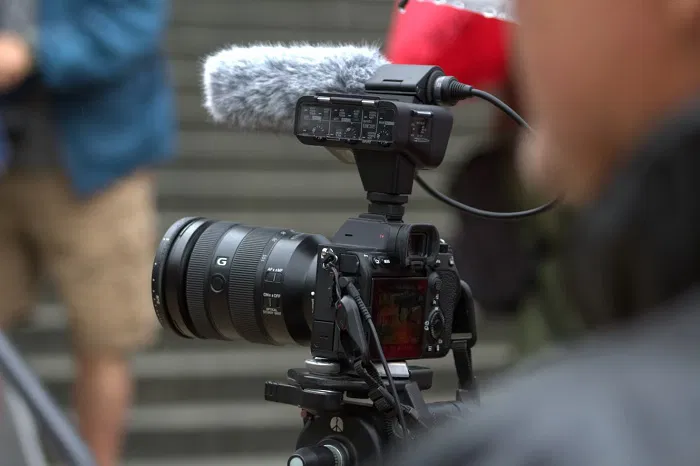
The built-in camera mics are not sufficient to vlog, as specialized microphones provide better sound that is more professional. In 2025, the best options include:
- Rode VideoMic Pro+: shotgun microphone at the premium level of YouTubers.
- DJI Mic 2: wireless lavalier system for travel and interviews.
- Sennheiser MKE 400: small portable shotgun microphone.
- Boyal BY-M1: a first-time lavalier on a budget.
- Deity D4 Duo: two capsule on-camera mic immersive sound.
- Rode Wireless GO II: a wireless system for the pro level and recording of a backup.
Beginners can afford to use budget lavaliers, travel vloggers need compact shotguns, and professionals will enjoy wireless systems. Depending on your type of camera, mic input, and the type of content you need, a good mic is also one of the best accessories to add to your vlogging adventure.
Introduction
Unless you are a beginner in vlogging, chances are that you have invested in a good camera, either a DSLR, a mirrorless, or a compact one. However, herein lies the key that most novices find to their chagrin, and that is not enough: the camera has an internal microphone. Although the camera takes beautiful video, the audio of the camera is not always good. You can immediately make your content look unprofessional through background noise, echo, and low volume.
This is why selecting the appropriate camera mic for vlogging is equally significant as the selection of the lens or lighting. A specialized microphone will improve the quality of your production, whether you are recording travel vlogs, YouTube tutorials, or other short-form content, and allow you to engage your audience more effectively.
We are going to take you through the various kinds of vlogging microphones, what to consider, and the best DSLR camera mics and on-camera microphones in 2025.
Why You Need a Dedicated Camera Mic for Vlogging
The vast majority of cameras do not include excellent audio systems, including the high-end ones. Inbuilt mics are compact, omnidirectional, and they can pick up noise in the wind or the crowd. In the case of vloggers, it is a disturbed audio that can push people away.
With an upgrade including a dedicated camera mic, you will have:
- Precision – Your voice is not that of the background.
- Directionality – Sound is captured in the direction that you want and not everywhere around you.
- Professional feel- Crisp, studio sound enhances watch time and interaction.
When your model supports a mic input camera (mic input is common with DSLR cameras, mirrorless cameras, and Sony cameras that support the mic), then you are halfway there; all you need is an appropriate mic to use.
Types of Microphones for Vlogging
The type of microphone to use is determined by the style of shooting. Let’s break them down:
Shotgun Microphones
They are directional mics that receive any sound where it is directed, but not in the background. Fits well with run-and-gun vloggers who would shoot outside or on the road.
Lavalier Microphones
Lapel mics, also referred to as lapel mics, are tiny clip-on microphones that are ideal for interviews or tutorials, or sit-down content. They connect to wires, but wireless lav systems are becoming popular in 2025.
On-Camera Microphones
They are plug-and-play solutions that fit on the round mirrorless or DSLR camera. They are small, convenient, and popular among new vloggers.
Wireless Systems
Wireless mics are a savior to creators with high mobility. They provide freedom of movement without being tied to your camera and hence are ideal to use in travel vlogs and professional shoots.
What to Look for in a Vlogging Microphone
In purchasing the most suitable camera mic to vlog, the following aspects are what are important:
- Compatibility -Ensure that it is compatible with your camera (DSLR, mirrorless, or compact). As an example, most shotgun or wireless systems can be used with a Sony camera with a mic input.
- Portability – Lightweight mics are necessary in case you are a travel vlogger.
- Directionality Cards: The cardioid and super-cardioid will pick up front-facing sound.
- Battery life. A battery is necessary in some mics; some come out of your camera.
- Budget – Entry-level mics are available below the price of approximately £30, whereas professional wireless systems are available above the price of approximately £300.
Best Camera Microphones for Vlogging in 2025
These are the best vloggers, YouTubers, and content creators this year.
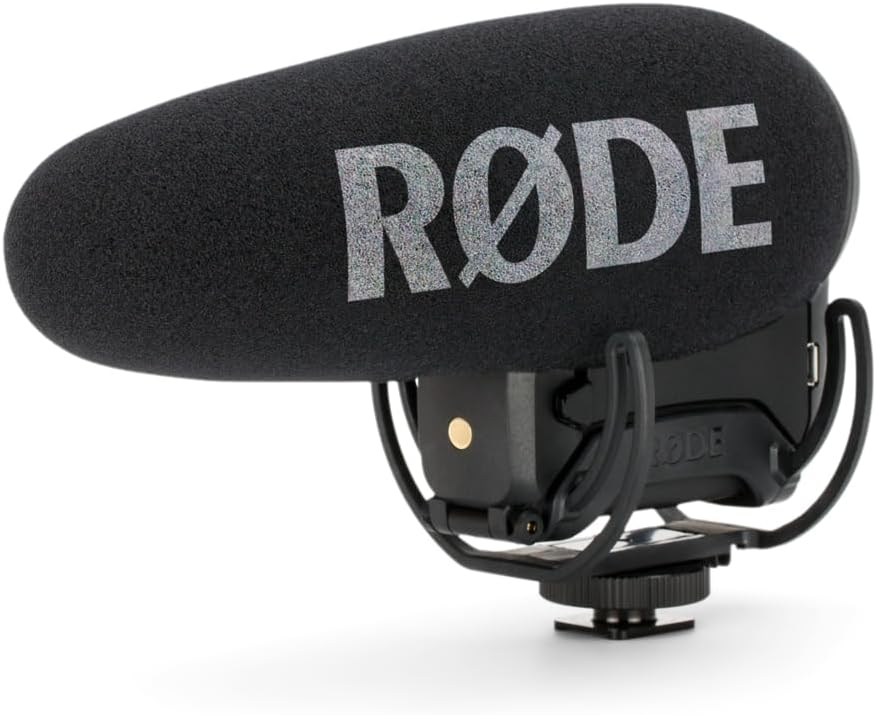
1. Rode VideoMic Pro+ (Shotgun)
The Rode VideoMic Pro+ is among the most used DSLR camera mics by those creators who desire high-quality sound. It attaches directly to your camera and provides directional and rich audio that is ideal when you are taking shots outdoors.
Pros:
- Clarified good sound with rejection of backgrounds.
- Long-life rechargeable battery.
- The use of DSLRs, mirrorless, and compact cameras.
Cons:
- On the pricier side
- Slightly bulky for travel
Best Use: YouTubers and serious vloggers who need a professional quality of audio.
Affiliate Link: Rode VideoMic Pro (Shotgun)
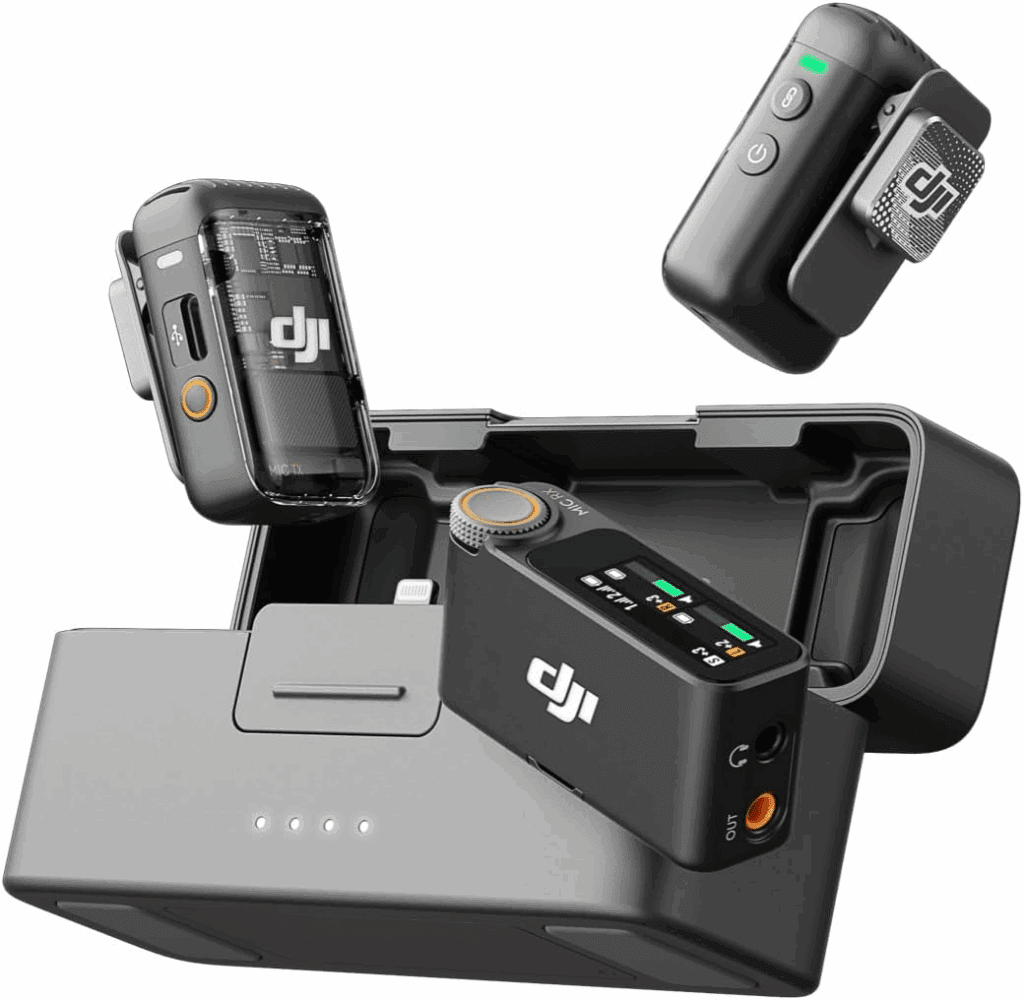
2. DJI Mic 2 (Wireless Lavalier System)
The DJI Mic 2 is a small wireless platform that has gained popularity among vloggers. It is available in two transmitters (clip-on mics) and one receiver, which is ideal in terms of interviews and portable content.
Pros:
- Freedom that is wireless and has a great range.
- Rechargeable case included
- Plays with Sony cameras that contain a mic input.
Cons:
- More costly than simple lavaliers.
- Minor learning curve among beginners.
Best Suit: Travel vloggers and creators who produce their content in interviews.
Affiliate Link: DJI Mic 2 (2 TX + 1 RX + Charging Case)
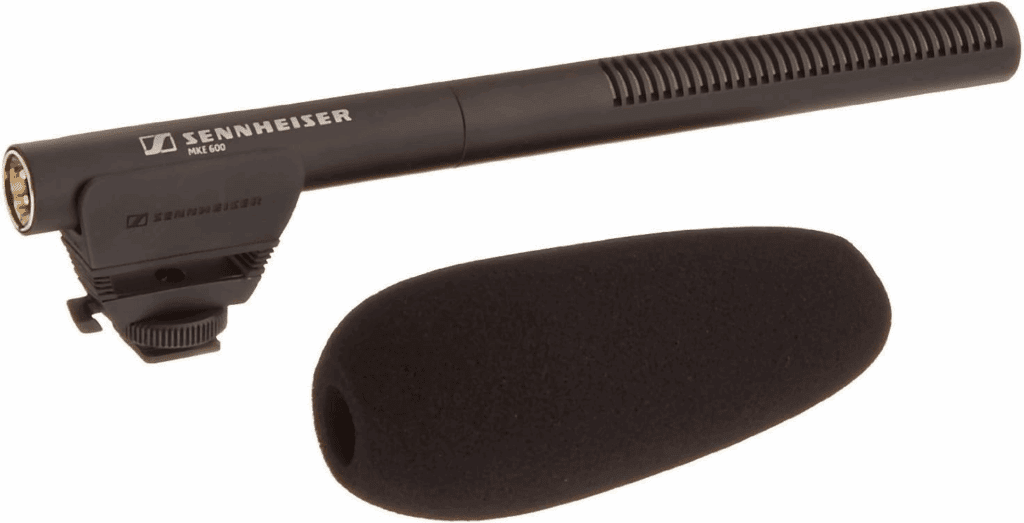
3. Microphones MKE 400 (Compact Shotgun) by Sennheiser
This is a smooth and lightweight shotgun microphone that vloggers need to be great-sounding without being large. The Sennheiser MKE 400 is a simple top-mount camera microphone that provides a sharp and concentrated sound.
Pros:
- Small and lightweight size.
- Large battery capacity (AAA powered).
- Exquisite fit with DSLRs and Sony cameras, which have input mics.
Cons:
- Small pickup patterns can skip a variety of voices.
- Requires batteries
Best For: The traveling vloggers who require being able to move around and still sound good.
Affiliate Link: Microphones MKE 400 (Compact Shotgun) by Sennheiser
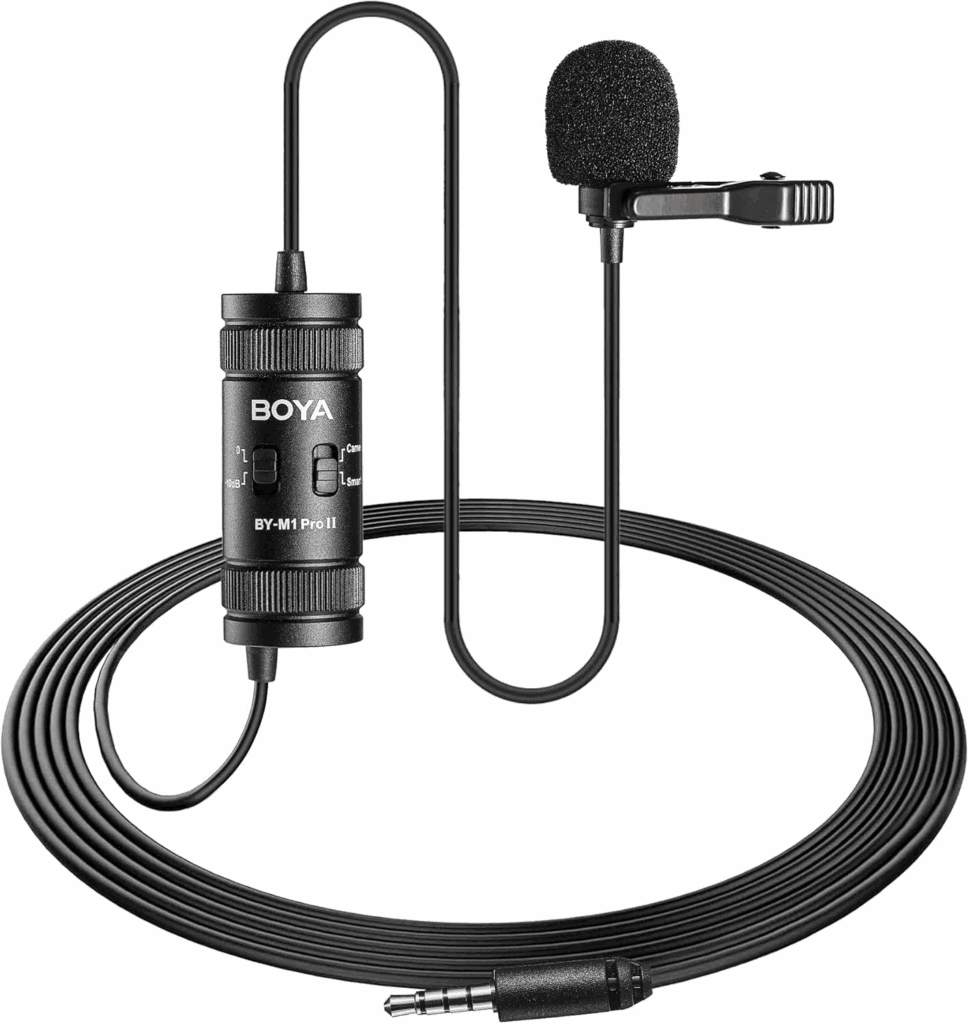
4. Boya BY-M1 (Budget Lavalier)
In case you are on a tight budget, then one of the most entry-level lavalier mics is the Boya BY-M1. It is weird, and the sound quality is remarkably good and clear considering the price.
Pros:
- Extremely affordable
- Works with smartphones, cameras, and laptops.
- Long cable (6m) for flexibility
Cons:
- A wired setup can be limiting
- Build quality isn’t premium
Ideal Use: Amateurs and those with a first-time DSLR camera microphone.
Affiliate Link: BOYA Lavalier Lapel Microphone
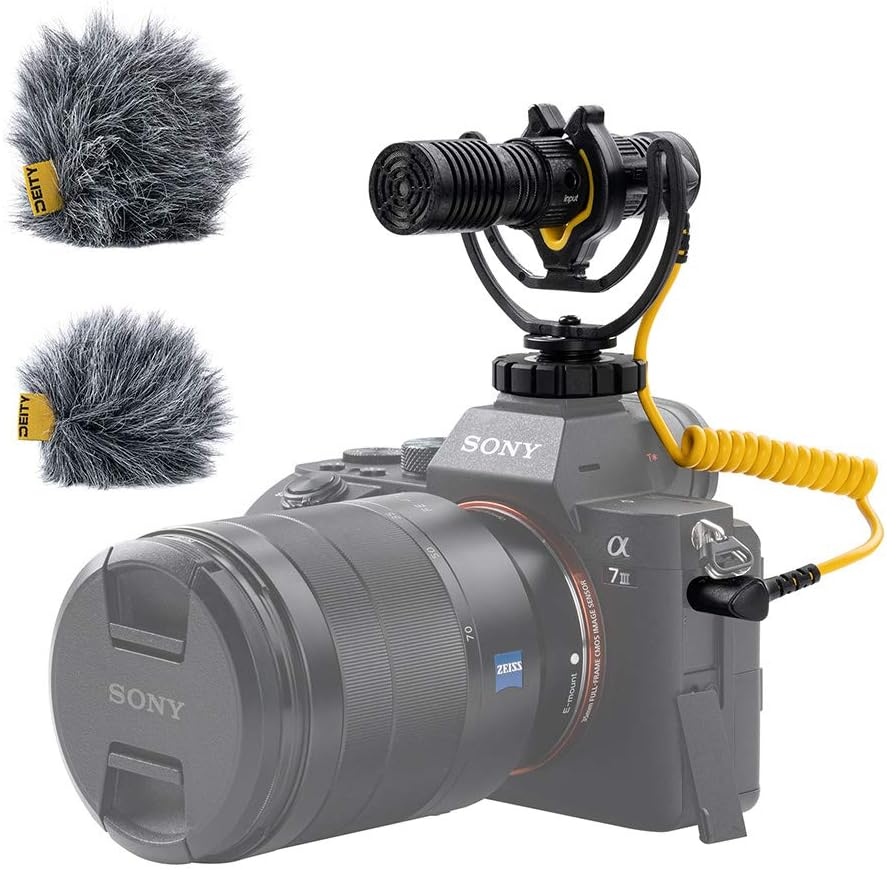
5. Deity D4 Duo (dual Capsule On-Camera Mic)
The Deity D4 Duo comes with a special option that has two capsules; one facing forward and the other facing backward. This is suitable for the vloggers who desire to record their voice and background music.
Pros:
- Dual recording capsules
- Price is effective over expensive mics.
- Portable and user-friendly.
Cons:
- It doesn’t sound as good as Rode or Sennheiser.
- Unsuitable in noisy conditions.
Best In: Travel vlogs or street vlogs where the vlogger prefers immersive sound.
Affiliate Link: Deity V-Mic D4 Duo Dual Capsule Cardioid Microphone Camera-Mount Shotgun Mic Dual Mono/Stereo Recording Plug and Play with Rycote Shockmount for DSLR Camcorder Smartphone
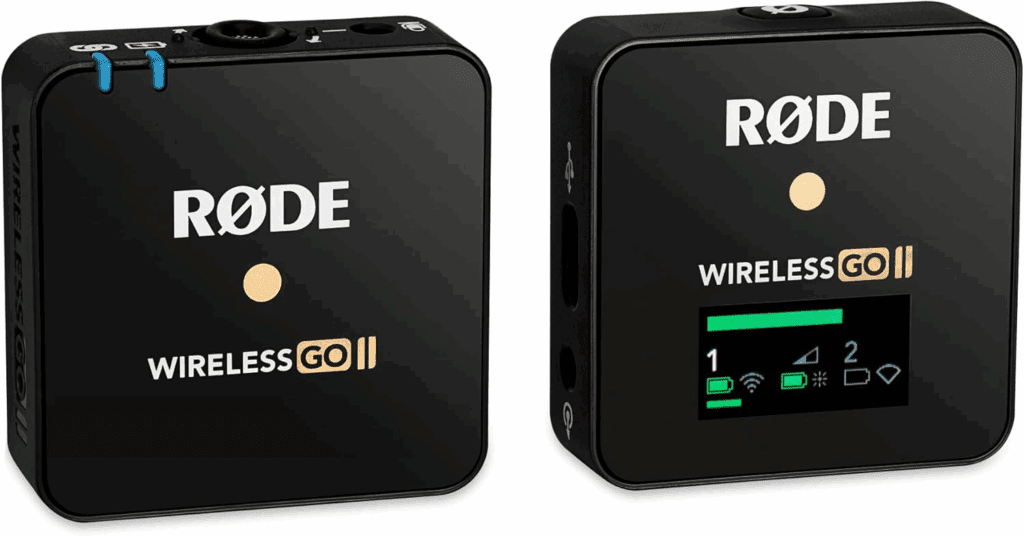
6. Rode Wireless GO II (Wireless System)
One of the most popular products among professional creators, the Rode Wireless GO II is the product of unparalleled versatility. It has two transmitters, can record internally, and has a great range on wireless, which makes it one of the best camera mics to use in vlogging.
Pros:
- Compact and wireless
- Audio loss is avoided through internal backup recording.
- Supports DSLRs, mirrorless, and even smartphones.
Cons:
- Premium price point
- Needs time to set up properly
Best Fit: Filmmakers, YouTubers, and other professional vloggers.
Affiliate Link: Rode Wireless GO II Single Channel Wireless Microphone System, Black
Which Camera Mic is the one you need?
- Aspiring professionals on a budget: Boya BY-M1.
- Travel bloggers: Sennheiser MKE 400 or Deity D4 Duo.
- YouTubers: Rode VideoMic Pro+
- Additional interview or tutorial founders: DJI Mic 2.
- Pros and full-time creators Two-choice Rode wireless GO II.
The optimal mic will vary based on the type of content, type of camera, and budget. Almost all these mics will be compatible with a Sony camera equipped with a mic input.
Conclusion
A good video should be accompanied by good sound. One of the most intelligent decisions you can ever make as a content creator is to make an investment in the right camera mic for vlogging. It could be a DSLR camera mic, a wireless lavalier, or an on-camera shotgun, but your audience will instantly realize how much clearer and professional the sound is.
Remember:
- Novices can opt for entry-level alternatives, such as the Boya BY-M1.
- Producers willing to go to a higher level must look at Rode or DJI wireless systems.
- Always ensure that you match your mic to your mic input camera; otherwise, compatibility will fail.
A quality microphone is not an accessory at the end of the day; it is an investment in the performance of your content. Improve your mic, and you will improve your whole vlogging experience.